In short: fair relief comes from agreeing the rules in advance (subject first, then the teacher with the most free time and the fewest relief periods this week), applying them the same way every morning, and telling teachers before the first bell. Software such as Relief Manager applies those rules automatically and keeps the record.
What a relief period is
In Sri Lankan schools a relief period is a lesson covered by another teacher because the class teacher is absent, on half-day or short leave, or away on official duty. Every morning someone, usually a deputy principal or sectional head, has to find a free teacher for each of those periods and let them know.
Why relief eats the morning
- Time pressure. Leave requests arrive between 7:00 and 7:30. The list has to be ready before the first period.
- Hidden information. To know who is free in period 3 you need every teacher's timetable open at once.
- Uneven load. When the list is rushed, the same willing teachers get asked again and again.
- Missed messages. A relief list pinned in the staff room is easy to miss for a teacher who went straight to class.
- No record. At the end of the term nobody can say who covered how many periods.
Six rules that make relief fair
- Subject first. If a teacher of the same subject, or the absent teacher's subject partner, is free, ask them first. Students lose less.
- Count the week, not the day. Prefer teachers who have done the fewest relief periods this week.
- Respect free periods. A teacher with one free period left today should be asked after one with three.
- Keep people close. Choose a teacher whose previous class is in the same section, so the class is not left waiting.
- Protect real duties. Sectional heads, exam coordinators and teachers with fixed duties should have those periods blocked.
- Exempt what does not need cover. Classes away on a field trip, or on a sports meet day, should be left out.
Write these rules down, share them at a staff meeting, and apply them the same way every day. Most complaints about relief are really complaints about rules nobody can see.
A 10-minute morning routine
- Collect leave by 7:15 and note the type: full day, half day (morning or evening), short leave or official duty.
- List every period that needs cover.
- For each period, apply the six rules in order.
- Tell teachers directly by message, not only on the notice board.
- Print one summary for the office and keep it for the record.
Doing it with Relief Manager
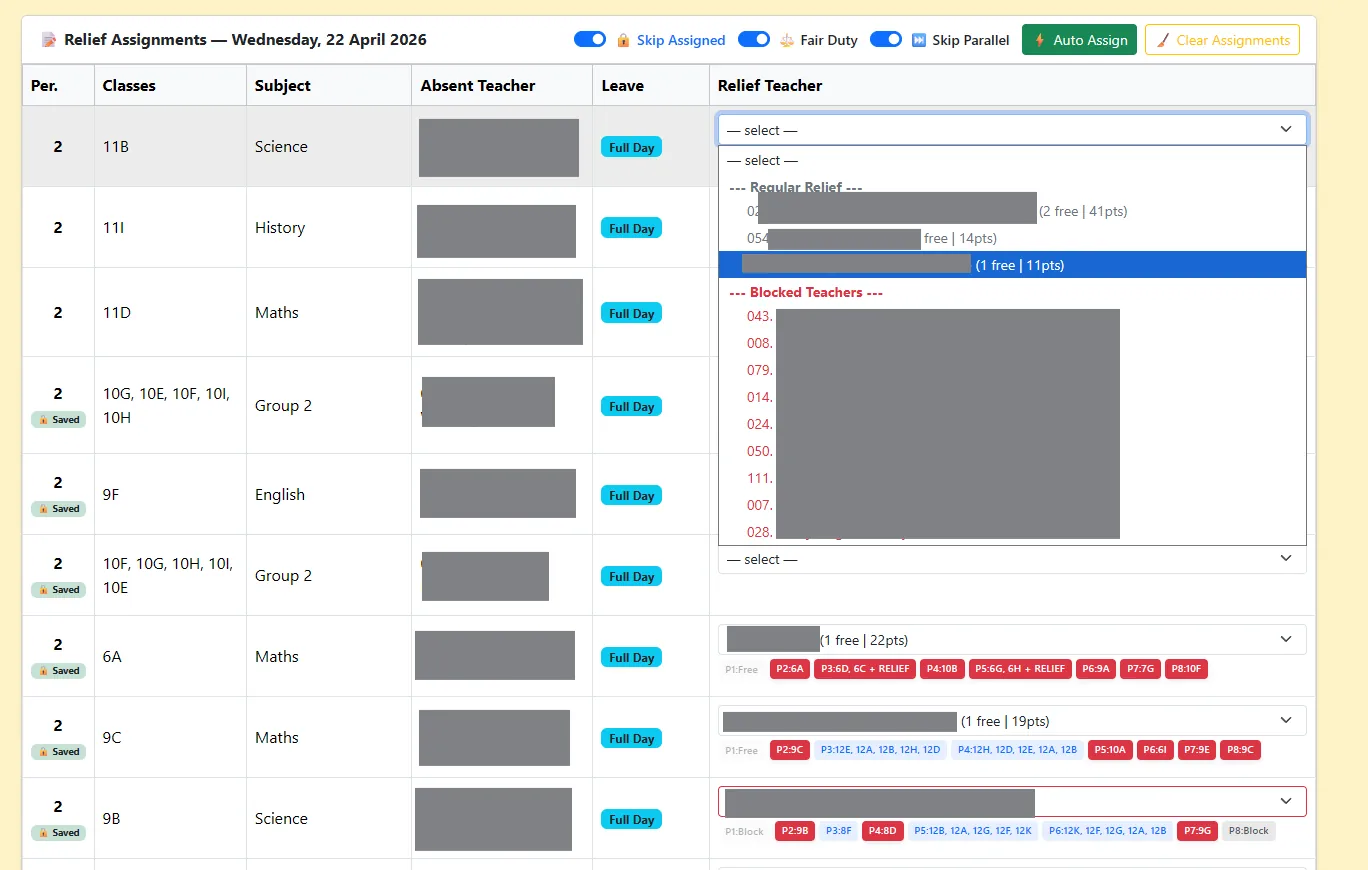
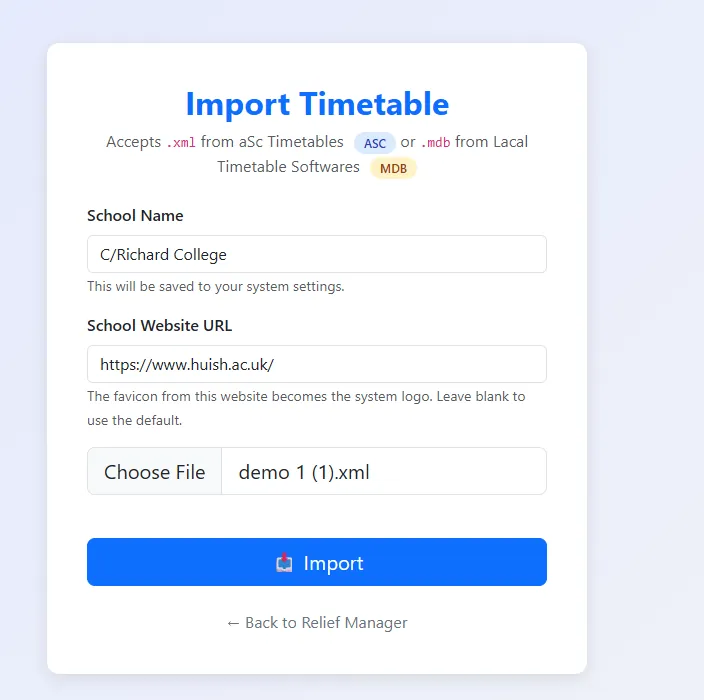
Relief Manager turns this routine into a few clicks. It imports your timetable from aSc Timetables, so it already knows who is free. Each of the six rules is a weighted setting you control, with presets such as Balanced and Fair Distribution. You mark absent teachers with their leave type, press Auto Assign, review the suggestions and confirm. Teachers are notified on WhatsApp, SMS or the TeacherSync app, and the analytics dashboard shows who covered how much.
See how the fairness rules work or follow the step-by-step guide.
Questions
What is the difference between relief and a substitute teacher?
They mean the same job. "Relief" is the word used in Sri Lankan schools; "substitution" or "cover" are used in other countries.
Should official duty count against a teacher?
Track it separately. A teacher away on school business is not on personal leave, and mixing the two makes attendance reports unfair.
What if the internet or power fails?
Keep printed emergency relief templates in the office. Relief Manager's help centre includes individual slips and a master board you can print in advance.